
编者按:在全球文化交流日益深入的今天,旅游已超越地理意义上的移动,成为文明对话的重要途径。随着“中国热”在世界范围内持续升温,中国正以更加主动的姿态,推动文化交流从单向输出转向双向互动。这一转变体现出中国对文明交流规律的深刻把握缅甸曼德勒华人微信群,彰显了一个文明古国在当代语境下的文化自觉与行动力。它向世界表明:一种文明的生命力,不仅体现在其悠久的历史与丰厚的遗产,更在于它是否依然能为当今世界提供具有启发意义的智慧与方案。
清晨的北京胡同里,一群欧洲青年正穿梭其间,感受这座城市的最真实的生活气息。不远处的公园里,几位外国游客在大爷的指点下学起了抖空竹。他们的动作虽然生涩,眼睛里却满是好奇和专注。在这些平凡的旅行瞬间里,抽象的“文化交流”概念变得真切可感。当文化走出展柜,融入市井烟火,中国与世界对话的方式,也就在这一次次真实的相遇中被悄然改写。
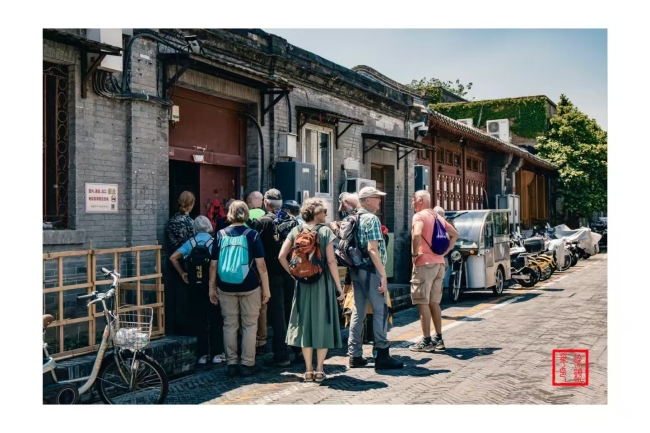
图为外国游客在北京胡同游览
过去,相对复杂的签证手续,削弱了中国作为短期旅游目的地的吸引力,使其难以成为国际游客“说走就走”的第一选择。这种无形的门槛不仅影响了游客数量,也在一定程度上塑造了一个略显疏离的中国形象。
如今,这一状况正在改变。近年来,中国通过单方面免签、互免签证、落地签等多种便利措施,为外国公民来华提供更加便捷的选择。根据国家移民管理局发布的消息,今年1月份至8月份,免签入境的外国人1589万人次,占入境外国人62.1%,同比上升52.1%。这一数据清晰地表明,市场对于更便捷入境政策的渴求与回应。
在此背景下,商务部等9部门联合印发《关于扩大服务消费的若干政策措施》,明确提出将“有序扩大单方面免签国家范围,优化完善区域性入境免签政策”,并持续优化全流程便利化措施。这一政策的推出,是中国主动扩大对外开放的切实体现。随着相关措施的落地,一个更加开放、包容、便捷的旅游环境正在加速形成。
由政策催化的“中国热”,正悄然改变着外国游客的旅行方式。他们不再满足于经典地标之间的往返,而是倾向于深入城市内部,根据自己的兴趣进行自主探索。北京的胡同小巷、上海的时尚街区、成都的悠闲茶馆……这些与本地人日常生活紧密相连的场景,正和长城、故宫一样,成为他们感受中国、理解中国的新窗口。
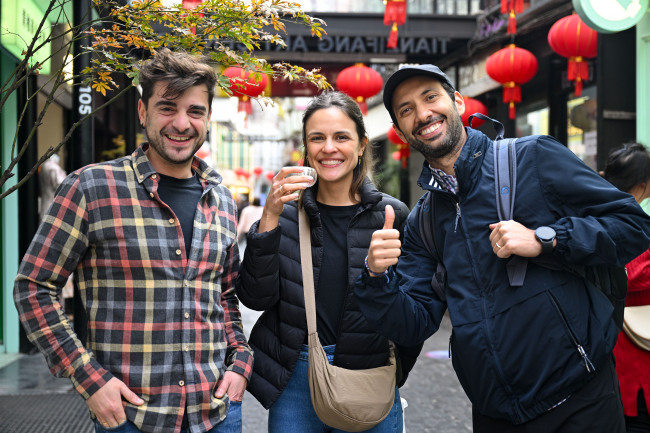
图为来自西班牙的游客在上海田子坊品尝浆果茶
这股探索中国的新浪潮,对旅游服务的“软环境”提出了更高要求。面对变化,市场积极求变、主动升级。旅行社和在线平台不再局限于提供千篇一律的“标准路线”,而是迅速转型,东南亚 海岛成为个性化旅行体验的“定制者”。与此同时,为顺应自由行游客不断增长的需求,灵活多样的一日游、半日游等“碎片化”产品也应运而生,让探索中国的旅程变得更加自由便捷。
在技术层面,人工智能正为外国游客搭建起一座无障碍沟通的桥梁。从服务于国际游客的GoChina.ai,到深度融合敦煌文化知识库的敦煌智能体,再到故宫随问随答的多语言AI导览,技术的力量让跨越语言的自主探索成为可能。它巧妙地将文化差异转化为交流的契机,使每一位游客都能以自己的节奏,与中华文明展开一场深度对话。
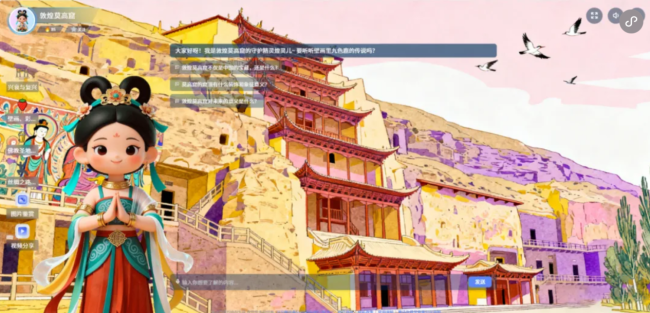
图为敦煌智能体
在“中国热”持续升温的背景下,中国做出的全方位努力提升了外国游客在这片土地上的旅行体验,也在无声中刷新着他们对中国的认知。来自瑞典的YouTube博主Rambling Bard在他的视频中坦言:“我来中国时心中还是有点忐忑,我不知道人们会如何对待作为外国人的我。无论去世界任何地方,你都会有这种感受,但在这里比平常多一点担心。”然而,在游览了桂林、丽江、成都、郑州等多个城市后,他说:“在我离开的时候,我对这里有了完全不同的看法……这是一个如此可爱的地方。”

图为Rambling Bard在嵩山少林寺
如今,越来越多像Rambling Bard一样的外国友人,正通过社交媒体分享他们在中国的所见所闻。这些由普通人亲身体验汇聚而成的中国印象,正逐渐打破几个世纪以来中西方间的认知壁垒,让一个鲜活立体的中国,在一次次真实的相遇中被世界感知和理解。
从政策开放到体验营造,中国与世界对话方式的转变,已初见成效。然而在肯定进步的同时,也必须清醒地认识到:要构建一个真正无障碍的旅行环境,我们依然有很长的路要走。对许多外国游客来说,语言隔阂、支付壁垒与不稳定的网络等,仍是旅行中时不时出现的痛点。而这些细节的完善与否,也将直接关系到这股“中国热”能否转化为持续的温度。为了让每一次短暂的相遇都能成为长期关注与深度理解的起点,我们不仅需要像《中国入境旅游发展年度报告2024》建议的那样,继续提升入境旅行便利度,更需对标国际旅行者的习惯,在支付、网络、服务等“软环境”上实现全面优化与升级。

图为外国游客在上海
这场全球范围内的“中国热”,其意义远超旅游本身。在这一过程中,中国希望向世界传递的,不仅是辉煌的过去,更是一个开放创新的现在与未来。当世界通过无数普通人的眼睛重新认识中国时,中国也在这面世界的镜子中,更清晰地看到自己在全球文明坐标中的位置与责任。这场由旅行开启的对话,最终指向一个共建共享、和而不同的未来。而中国,正致力于成为这一愿景的坚定共建者与积极引领者。
撰稿人:何博媛
From Afar to On the Ground: The Global Unfolding of the "China Fever"
Editor's Note: In today's world of increasingly deep global cultural exchanges, tourism has transcended mere geographical movement to become a vital pathway for dialogue among civilizations. As "China Fever" continues to heat up worldwide, China is adopting a more proactive stance, shifting cultural exchanges from one-way dissemination to dynamic two-way engagement. This transformation reflects China's profound understanding of the dynamics of civilizational exchange and highlights the cultural consciousness and agency of an ancient civilization in the contemporary context. It signals to the world that the vitality of a civilization lies not only in its long history and rich heritage but also in its continued capacity to offer wisdom and solutions of enlightening significance to the modern world.
On an early morning in a Beijing hutong, a group of European youths wanders through, soaking in the city's most authentic atmosphere. In a nearby park, several foreign tourists, under the guidance of a local elder, are learning to play diabolo (Chinese yo-yo). Their movements are clumsy, but their eyes are filled with curiosity and focus. In these ordinary moments of travel, the abstract concept of "cultural exchange" becomes tangible and real. When culture steps out of display cases and blends into the vibrant tapestry of everyday life, the way China converses with the world is quietly rewritten in these genuine encounters.
In the past, relatively complex visa procedures diminished China's appeal as a short-term tourist destination, making it difficult to be the top choice for international tourists seeking a "spur-of-the-moment" trip. This invisible barrier not only affected visitor numbers but also, to some extent, shaped a slightly distant image of China.
Now, this situation is changing. In recent years, through various facilitation measures such as unilateral visa exemptions, mutual visa exemptions, and visas on arrival, China has provided more convenient options for foreign nationals to visit. According to data from China's National Immigration Administration (NIA), in the first eight months of this year alone, 15.89 million foreign nationals entered China visa-free, accounting for 62.1% of all inbound foreigners, a year-on-year increase of 52.1%. This data clearly indicates the market's desire for and response to more convenient entry policies.
Against this backdrop, the Ministry of Commerce and eight other government bodies jointly issued the "Several Policy Measures on Expanding Service Consumption," explicitly proposing to "orderly expand the scope of unilateral visa exemption countries, optimize and improve regional inbound visa exemption policies," and continuously streamline the entire process of facilitation measures. The introduction of this policy is a tangible manifestation of China's proactive efforts to expand its opening-up. With the implementation of related measures, a more open, inclusive, and convenient tourism environment is rapidly taking shape.
Catalyzed by these policies, "China Fever" is quietly changing the way foreign tourists travel. They are no longer content with shuttling between classic landmarks but are inclined to delve deeper into the cities, exploring autonomously based on their interests. Beijing's hutongs and alleys, Shanghai's fashionable neighborhoods, Chengdu's leisurely tea houses... These scenes intimately connected to the daily lives of locals are becoming new windows for them to feel and understand China, just like the Great Wall and the Palace Museum.
This new wave of exploring China places higher demands on the "soft environment" of tourism services. In response to these changes, the market is actively adapting and proactively upgrading. Travel agencies and online platforms are no longer confined to offering uniform "standard itineraries" but are rapidly transforming into "customizers" of personalized travel experiences. Simultaneously, to cater to the growing demand from independent travelers, flexible and diverse "fragmented" products such as one-day and half-day tours have emerged, making journeys of exploration in China more free and convenient.
On the technological front, artificial intelligence is building a bridge for barrier-free communication for foreign tourists. From platforms like GoChina.ai serving international visitors, to the Dunhuang AI Guide deeply integrated with the knowledge base of Dunhuang culture, to the multilingual AI guides in the Palace Museum that provide instant answers, the power of technology is making language-independent autonomous exploration possible. It skillfully transforms cultural differences into opportunities for exchange, allowing every tourist to engage in a deep dialogue with Chinese civilization at their own pace.
Against the backdrop of the ongoing "China Fever," China's comprehensive efforts have enhanced the travel experience for foreign visitors on its soil and are silently refreshing their perceptions of China. The Swedish YouTube creator Rambling Bard admitted in his video: "I was a bit nervous coming to China. I didn't know how people would treat me as a foreigner. You get that feeling going anywhere new, but the worry was a bit stronger this time." However, after visiting cities like Guilin, Lijiang, Chengdu, and Zhengzhou, he said, "By the time I left, my view had completely changed... It's such a lovely place."
Nowadays, more and more foreign friends like Rambling Bard are sharing their experiences in China through social media. These impressions of China, gathered from the personal experiences of ordinary people, are gradually breaking down centuries-old cognitive barriers between East and West, allowing a vivid and multi-dimensional China to be perceived and understood by the world through genuine encounters.
The shift in how China engages in dialogue with the world, from policy opening to experience creation, is beginning to show results. However, while acknowledging the progress, we must also soberly recognize that there is still a long way to go to build a truly barrier-free travel environment. For many foreign tourists, language barriers, payment obstacles, and unstable internet access remain occasional pain points during their travels. The refinement of these details will directly impact whether this "China Fever" can be sustained. To ensure that every brief encounter can become a starting point for long-term interest and deep understanding, we not only need to continue improving the convenience of inbound travel, as suggested by the "China Inbound Tourism Development Annual Report (2024)," but also need to align with the habits of international travelers, achieving comprehensive optimization and upgrading of the "soft environment" — encompassing payments, internet access, and service quality.
The global "China Fever" holds significance far beyond tourism itself. In this process, what China hopes to convey to the world is not only its glorious past but also an open and innovative present and future. As the world comes to know China anew through the eyes of countless ordinary people, China also sees its position and responsibility in the coordinates of global civilization more clearly in this mirror of the world. This dialogue, initiated by travel, ultimately points towards a future built and shared by all缅甸曼德勒华人微信群, a world of harmony in diversity. And China is committed to being a steadfast co-builder and active leader of this vision.
